Families often face a dilemma: stay in a house they’re outgrowing or move from a neighbourhood they have deep roots in.
To architect, in this case, means projecting and expanding the future use of an existing past, double exposing with light and air.
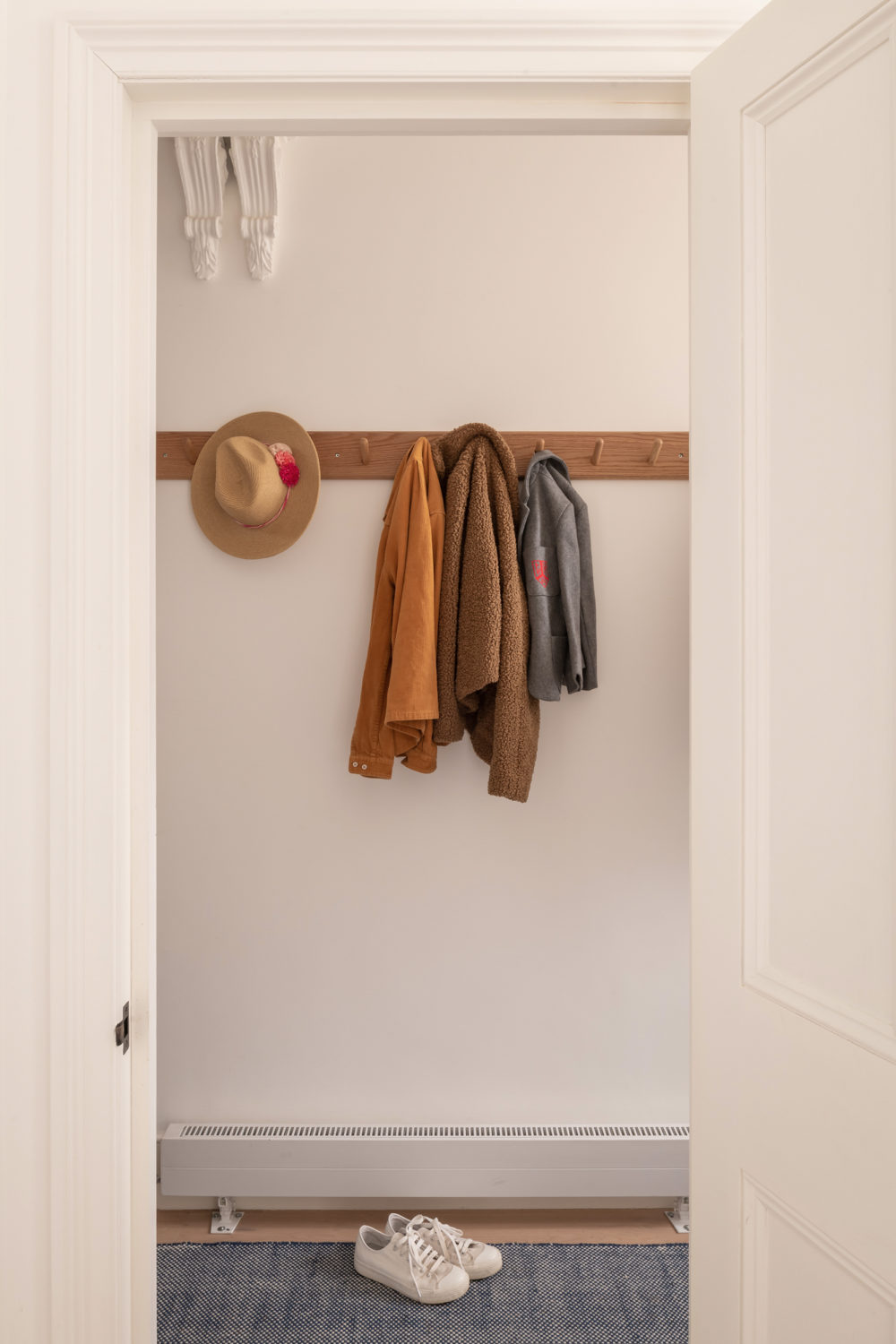
Merging redundant corridor space into a through room, replanning and raising the closet wing tower and creating a rooftop atelier reframes the relationship between the house and nature, bringing in light and garden views.
Materials already on site, such as cobbles, timbers and brick, were reused to honour our commitment to a circular economy. Traditional lime mortar lets new bricks be reclaimed in future too, just as Roman bricks still are to this day.
Year: 2020
Client: Anna Jobson and Andy Joslin
Location: Victoria Park Conservation Area, London
Category: Home
51 team: Catherine du Toit, Thomas Smethurst, Matthew Smith, Peter Thomas
Engineers: Price & Myers
Contractor: IC&T Projects
Kitchen Joinery: Vialle and Co
Courtyard benches: Jeremy Pitts
Photography: Jim Stephenson
“To bathe in the moonlight and shower under a tree is something I thought was only possible in the remote place I come from in Norway. With this inside-outside space, I can continue these elemental experiences in east London.”
– AK Dolven
Vicco’s Tower is a lightweight, light-filled, timber tower that was designed for Norwegian artist AK Dolven.
The design concept – “Inventive and modern without being formulaic” according to Grand Designs – celebrates nature in the city. In a dense urban environment, architecture becomes a lens on the natural world, focusing its beauty.
The house flows seamlessly into the garden, with windows framing particular private and public views. One vertical glass slot gives glimpses of a London plane, some 200 years old, on one of the original avenues planted in Georgian times.
RIBA Award winner, 2006
Grand Designs Award finalist, 2007
Shortlisted for Georgian Group Architectural Award, 2007
Year: 2006
Client: AK Dolven
Location: Queensbridge Road Conservation Area, London
Category: Home
51 team: Catherine du Toit, Siniša Rodić, Peter Thomas
Engineers: Price & Myers
Photography: Vegar Moen & Nigel Rigden
Agents: The Modern House
“A near-perfect architectural piece – the muted driftwood-grey boxes are weathering beautifully.”
– Helen Davies, The Sunday Times
The Experimental Station is an artists’ coastal retreat, comprising modest living quarters and north-lit studios.
The worn concrete and masonry interiors recall the property’s industrial heritage, with windows oriented to local landmarks. It is overclad with locally sourced rough-sawn cedar, while the library repurposes a small brick generator building.
51 architecture minimized the environmental impact of this new family of insulated structures on rare plant species by constructing rafts directly on the existing hardstanding, precast structural elements.
AIA Excellence in Design Award winner, 2013 RIBA Conservation Award winner, 2013
RIBA Regional Award winner, 2013
Chosen as one of the best new homes in Britain by Helen Davies, The Sunday Times, 16 June 2013
Year: 2013
Client: Johnson Naylor
Location: Site of Special Scientific Interest and designated Special Area of Conservation, Dungeness
Category: Artists’ retreat
Innovation: Architecture on the beach – only uses what is essential
51 team: Catherine du Toit, George Metcalfe, Peter Thomas
Engineer: Tim Macfarlane
“Just because you’re living on a low income, it doesn’t mean you don’t deserve the best facilities. We need a building that helps people feel good about themselves.”
– Aaron Barbour, Director of KLS
Katherine Low Settlement is a community centre that groups four historic buildings around a shared courtyard.
The future plan for these buildings, co-designed with KLS, will create better visibility, more accessible space and improved natural opportunities for networking between the more than 45 charitable groups that use the facility.
The design connects with the particular architecture of Battersea – which the community centre has been serving since 1924 – using brick, lightweight short-span timber and architectural ceramics that resonate with the location and give the buildings a personal and intimate feel.
Year: 2015–
Client: Katherine Low Settlement (www.klsettlement.org.uk)
Location: Battersea Square Conservation Area, London
Category: Community centre
Innovations: Tying location to materials
Team: Catherine du Toit, Viva Ruggi,Thomas Smethurst, Matthew Smith, Peter Thomas
Access Consultants: Proudlock Associates
Building Control: MLM Group
Engineers: Price & Myers
Services: P3r
Quantity Surveyor: Measur
Budget - £2,340,000 (Cost Plan 5 August 2019 ex VAT and Fees)
Area: 907m2 (Cost Plan 5 August 2019)
“The interior is scattered with unexpected, one-off details, just like the great modernist houses of the last century. The staircase is a mini design wonder. On the top floor, the house opens to the sky.”
– Caroline Roux, The Guardian
The Greenhouse is a family home that showcases the 51 ethos: heritage, technical innovation and quiet aesthetics.
The home of 51 architecture’s Catherine du Toit and Peter Thomas, the Greenhouse ascends from a concrete ground floor through a first floor fashioned largely from wood to a top floor that is predominantly glass.
“We’ve lived in our house for 20 years. We love the way it changes as we change, and how the garden has matured. It’s still magical walking up and down the staircase we designed, feeling the rightness of it for the human body.”
Year: 1999
Client: Catherine du Toit, Peter Thomas
Location: Dartmouth Park Conservation Area, London
Category: Home
Innovations: Rotating the building through 90 degrees to release potential of a tight urban site
Team: Catherine du Toit, Geoff Makstutis, Peter Thomas
Engineer: Tim Macfarlane
Contractor: Triple Dot
“A simple renovation made special by a showpiece staircase.”
– Eleanor Gibson, Dezeen
Casa Vota is an environmentally responsible, technically innovative and elegant family home.
Created using sustainable materials, including the crowns of local trees felled by strong winds, Casa Vota evokes the textures and light of its owners’ childhood in Italy. A new roof terrace gives panoramic views over London.
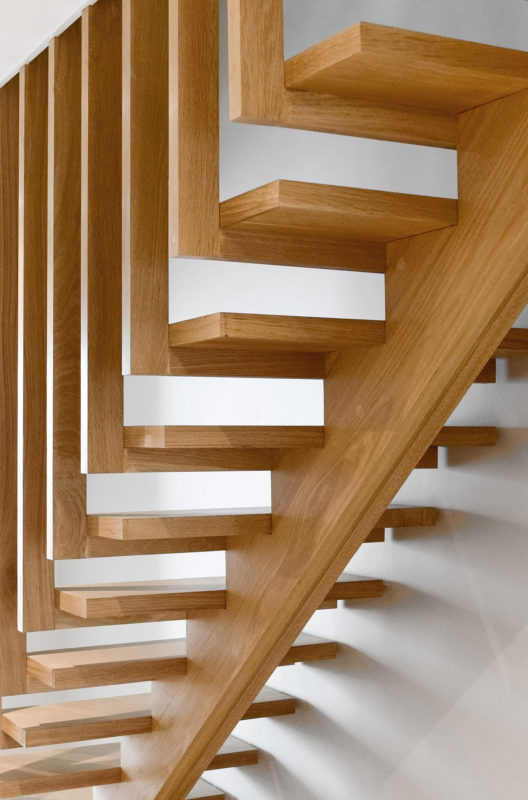
We collaborated closely with enthusiast engineers and site carpenters who were keen to work across their own limits: the ash-ply stairway, for instance, combines boat-building techniques and digital fabrication.
Year: 2018
Clients: Daniele Antonucci, Alessandra Vota
Location: Priory Road Conservation Area, London
Category: Home
Team: Catherine du Toit, Rob Newman, Thomas Smethurst, Mathew Smith, Peter Thomas
Engineers: Price & Myers
Contractor: Triple Dot
Press: Dezeen
Architecture for Other Species champions the vitality of nature in public spaces and the role biodiversity plays in our own health.
Since 2010, 51 architecture has been developing small, species specific structures for wildlife in cities. Public commissions include rain gardens, insect gardens, swift refuges, bat roosts, hedgehog gateways and beehives.
Although our core business is increasingly tailored to specific sites, providing bespoke designs to landscape architects, our habi-sabi range of flatpack nest boxes are also available both to the public and to contractors.
Supported by the RSPB and Swift Conservation
Swift drawings by Jonathan Pomroy
Download our resource list
Year: 2010—
Clients: University of Birmingham, Chelsea Barracks, GPB, Inmidtown, London Festival of Architecture, Lendlease, Tower Hamlets Cemetery Park, Woking Borough Council, Zoological Society of London and private clients worldwide
Category: Wildlife conservation
Innovations: Designed to briefs by species experts for urban public spaces
Team: Peter Beardsley, Catherine du Toit, Jonathan Harker, Billy Sinclair, Thomas Smethurst, Matthew Smith, Peter Thomas, Carolina Vallejo
“Social Cinema was as memorable as it was fugitive…”
– Alex Farquharson, Director, Tate Britain
Social Cinema was a series of outdoor cinemas in neglected spaces around landmark buildings.
Through playful and subtle architecture, buildings became screens, steps seating, houses projection booths, and unbuilt spaces auditoriums. Screenings began after sunset, with the public spaces shared by the audience and passersby.
In Alex Farquharson’s words, 51’s improvisatory approach made “delicious juxtapositions between London landmarks and films related to modernist thinking on architecture, urbanism and social progress in post-war Britain”.
Supported by the Architectural Association, Arts Council, Big Lottery Fund and the Photographers’ Gallery; for a film about Social Cinema 3, see www.neilcummings.com/content/social-cinema
Year: 2006
Client: London Architecture Biennale (now London Festival of Architecture)
Locations: Berthold Lubetkin’s Finsbury Health Centre, Millennium Bridge, St John’s Square
Category: Public programme
Innovations: The art of borrowing: no additional material (other than a screen at Millennium Bridge) used to create the cinemas
Team: Catherine du Toit and Peter Thomas, in collaboration with Neil Cummings and Marysia Lewandowska
Related Public Collection: Warsaw Museum National Archive
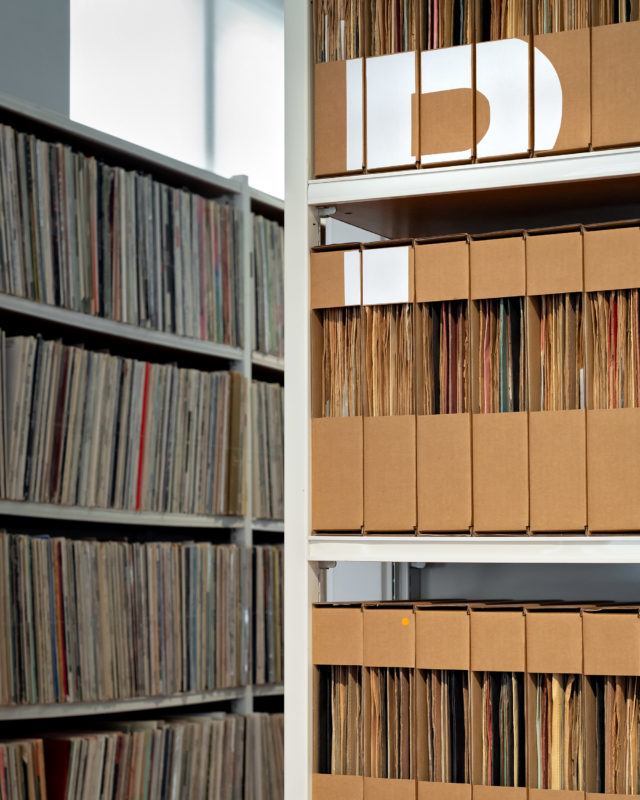
Play it Again! Use it Together is a listening booth and production facility for the IPM’s Open Music Archive.
This acoustically intelligent installation is a production site for digitizing vinyl records and a booth for close listening to the Open Music Archive, an exceptional public research resource gifted by collectors and enthusiasts.
Self-supporting and fully demountable to allow it to travel anywhere, from a Grade I-listed gallery to former shops, Play It Again! was supported by events at which guest artists remixed the evolving collection of 80,000 records.
'Play it Again! Use it Together: Open Music Archive feat. 51 architecture' was curated by Rose Lejeune; for more details, see www.openmusicarchive.org/.
Year: 2018
Client: University of Liverpool’s Institute of Popular Music
Locations: Victoria Gallery & Museum, Liverpool, former high-street shops
Category: Public programme
Innovations: Acoustic damping of the fully demountable screens using recycled cotton
Team: Catherine du Toit, Thomas Smethurst, Peter Thomas
Engineer: Anderson Inge
The retrofitting and transformation of the existing housing stock of the UK is one form of practice where both additional housing provision and reduction in carbon footprint can be achieved – the transformation of a terraced house on Rona Road by doubling a single dwelling into two is a key strategy. The achievement here is this to do this within an existing urban street form and a conservation area.
In this case the additional accommodation was provided with the rebuilding of the plot level rear two storey element as throughspace to the floor levels of the house and by extending the cellar into a slightly larger habitable basement.
Year: 2018
Client: Brendan Massam
Location: Mansfield Conservation Area, London
Category: House
Innovations: remodelling a half landing rear extension so that it connected to the main living levels to give more usable space
Team: Catherine du Toit, Matthew Smith, Peter Thomas
“51 architecture excelled in site- and culture-appropriate design considerations, creativity and flexibility for a very reasonable price within a short six-week time frame.”
– Jenny Inge, President, Mineral County Fairgrounds Association
Creede habitat required a flexible masterplan for 18.6 Hectares of donated land in a remote Colorado mountain community.
51 architecture worked with the local non-profit to secure state and county funding for a functional wetland landscape, a wildlife habitat of native willows coupled with an outdoor arena with spectacular mountain views.
Year: 2008
Client: Mineral County Fairgrounds Association
Location: Creede, Colorado
Category: Functional landscape
Team: Catherine du Toit, Anderson Inge, Atsushi Iwata, Peter Thomas
Prototypical media workshare space for Mumsnet at that time rapidly growing from 6 to 60, and now 200. The approach was later developed for curators workspace at the Whitechapel Gallery, London and as a format for rapidly deployable edit suits for post-production company Cut + Run in Soho, New York.
Mumsnet London Floor area: 2992 sq ft / 278 sq m
Cut + Run New York 10,000ft2 / 930m2
Year: 2008
Client: Mumsnet
Location: Kentish Town, London
Category: Workplace
Innovations: Quick cheap privacy in an open-plan workplace
Team: Catherine du Toit, Matthew Smith, Peter Thomas
Related: https://cutandrun.com/about/ xxxSC
Year: 2017
Clients: Tracey Joseph, Jane Withers
Location: Shoreditch, London
Category: Landscape
Innovations: Use of existing materials in new relationships
Team: Peter Beardsley, Catherine du Toit, Thomas Smethurst
Southsea House remodels a Victorian terrace into flexible, non-prescriptive space for a multi-generational family.
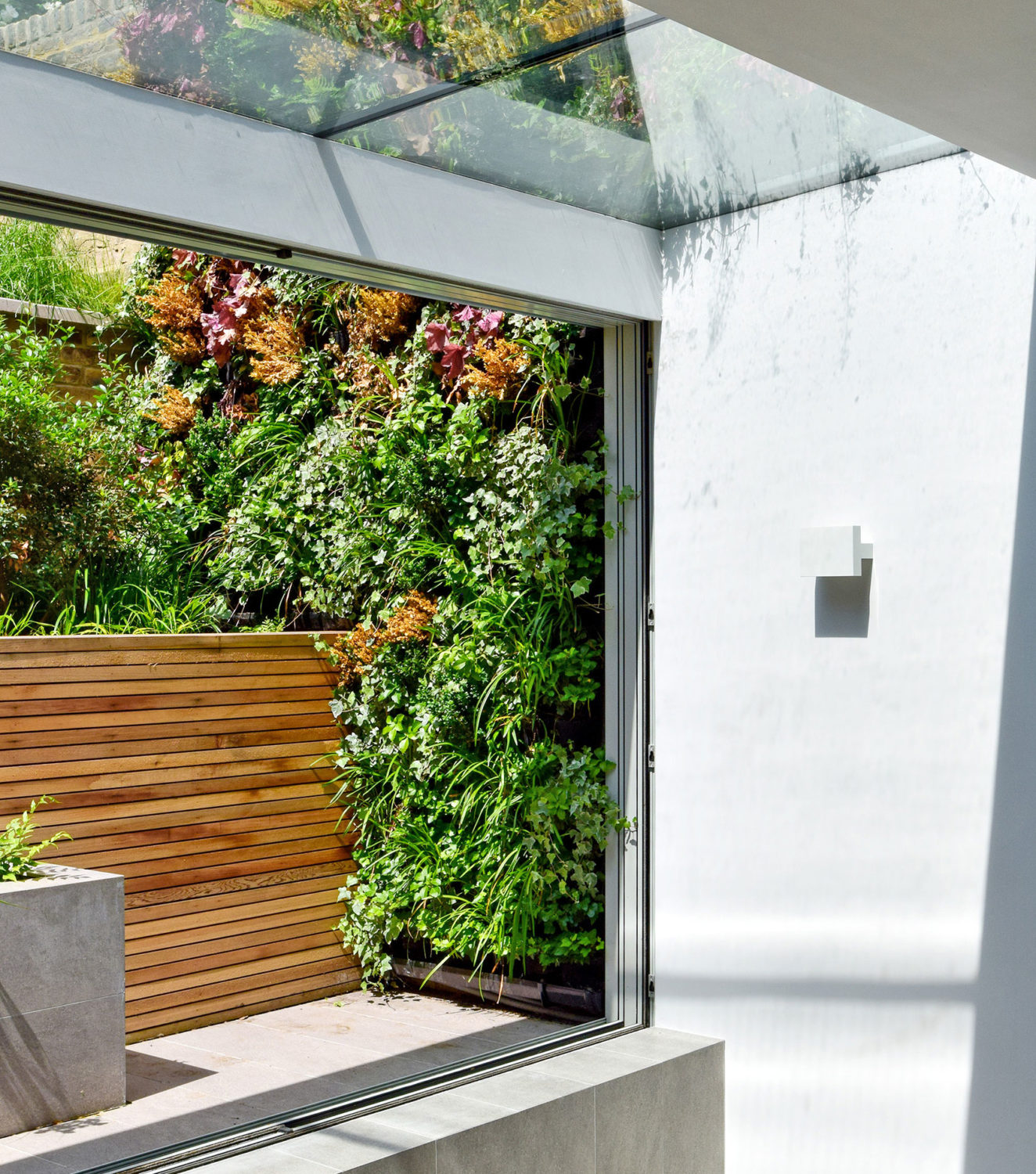
51’s full-width textured brick extension reconnects the house to the garden with an inside/outside room, made possible by glazing innovations that allow large areas of glass to be as thermally efficient as solid walls.
Natural light is brought into the heart of these new reception spaces through slim windows, while a roof light at the junction between the extension and the original house accentuates the lustre of the original glazed-tile floor.
Year: 2015
Clients: Bojana Bellamy, Jonathan Bellamy
Location: Old Chiswick Conservation Area, London
Category: Home
Innovations: Textured brick, thermally efficient glazing
Team: Catherine du Toit, Billy Sinclair, Peter Thomas
Bath House is a historic house, revived by 51 architecture working alongside specialised restoration artisans.
The interior of the house – in one of Bath’s later Georgian terraces – was cluttered and fussy. We stripped it back, cleaned it out and breathed new life and light into what had previously been dingy spaces.
In a world of machine and digital crafting, 51 made the renovation of this listed property a study in exposing the hand of the maker. Our design revealed rough-hewn limestone, offset by jute runners and bespoke cabinetry.
Year: 2018
Client: David Childs, Joyce Childs
Location: 14 Prior Park Buildings, Bath
Category: Home
Innovation: Insulated Bath stone floor
Team: Catherine du Toit, Thomas Smethurst, Peter Thomas
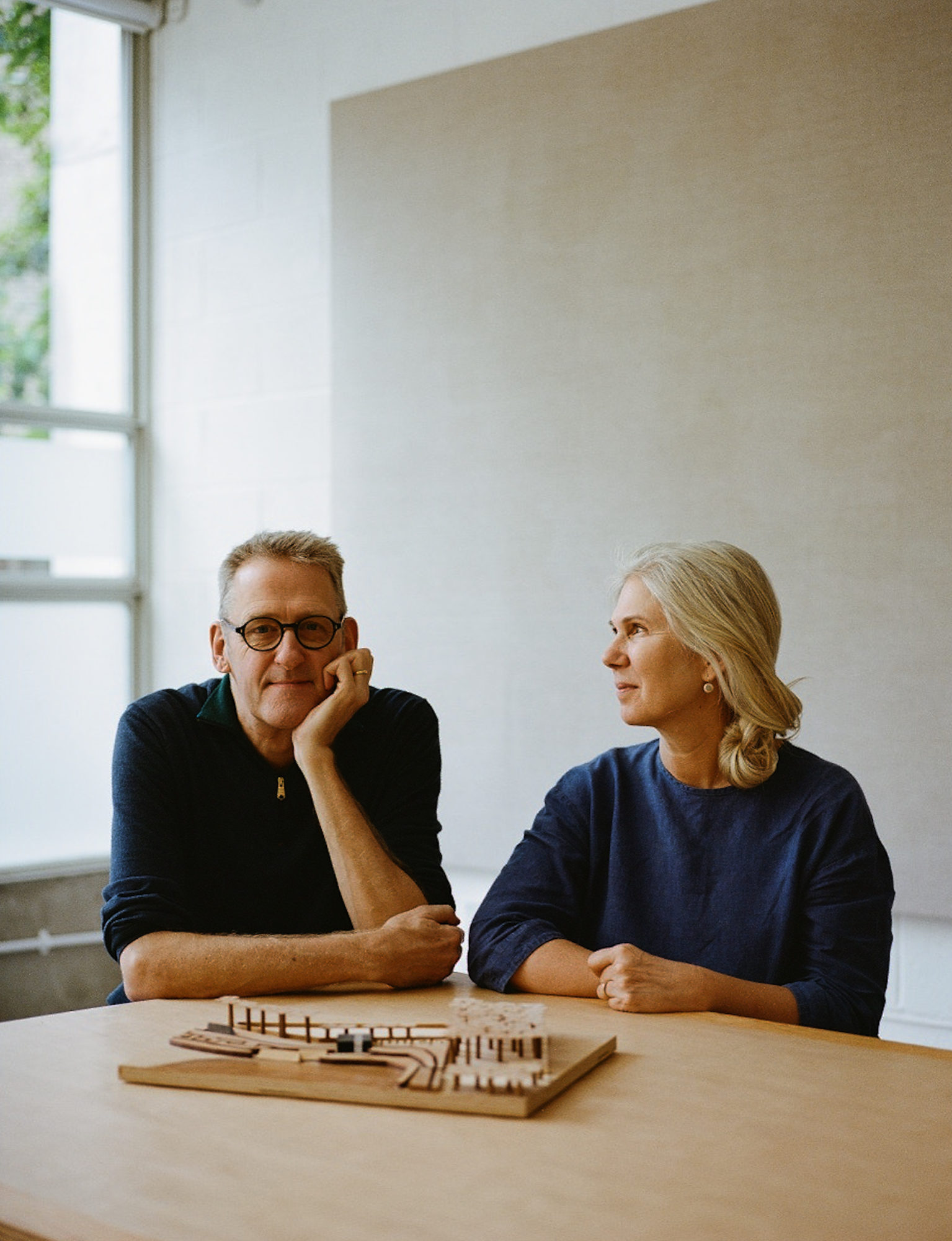
Our technical, ethical and aesthetic solutions maximise a site’s natural heritage and social environment to create enduring buildings and landscapes.
51 architecture’s award-winning urban interventions, private houses, community spaces and public exhibitions at home and abroad are distinguished by the efficiency and durability of their workings and the calm beauty of their forms and finishes.
“We work with what’s already there: structures, materials, human activity, the weather. This is the most basic principle of responsible 21st-century design and the source of much of our creativity.”
Catherine du Toit and Peter Thomas
51 architecture
1a Cobham Mews
London NW1 9SB
+44 (0)2033 551205
info@51architecture.com
Follow us on Instagram
Website design: Kellenberger–White
Development: Twelve
All work on this website is licensed under a Creative Commons Attribution 4.0 International License.